
- Registration and eligibility problems were the largest single cause of denials (about 24%) in a national denials index of 3.3 billion claim transactions.
- Verify before every visit, not just the first; coverage changes more often than staff expect.
- Check more than "active": payer order, benefits, authorization and network status.
- Electronic verification turns a phone call into a few seconds.
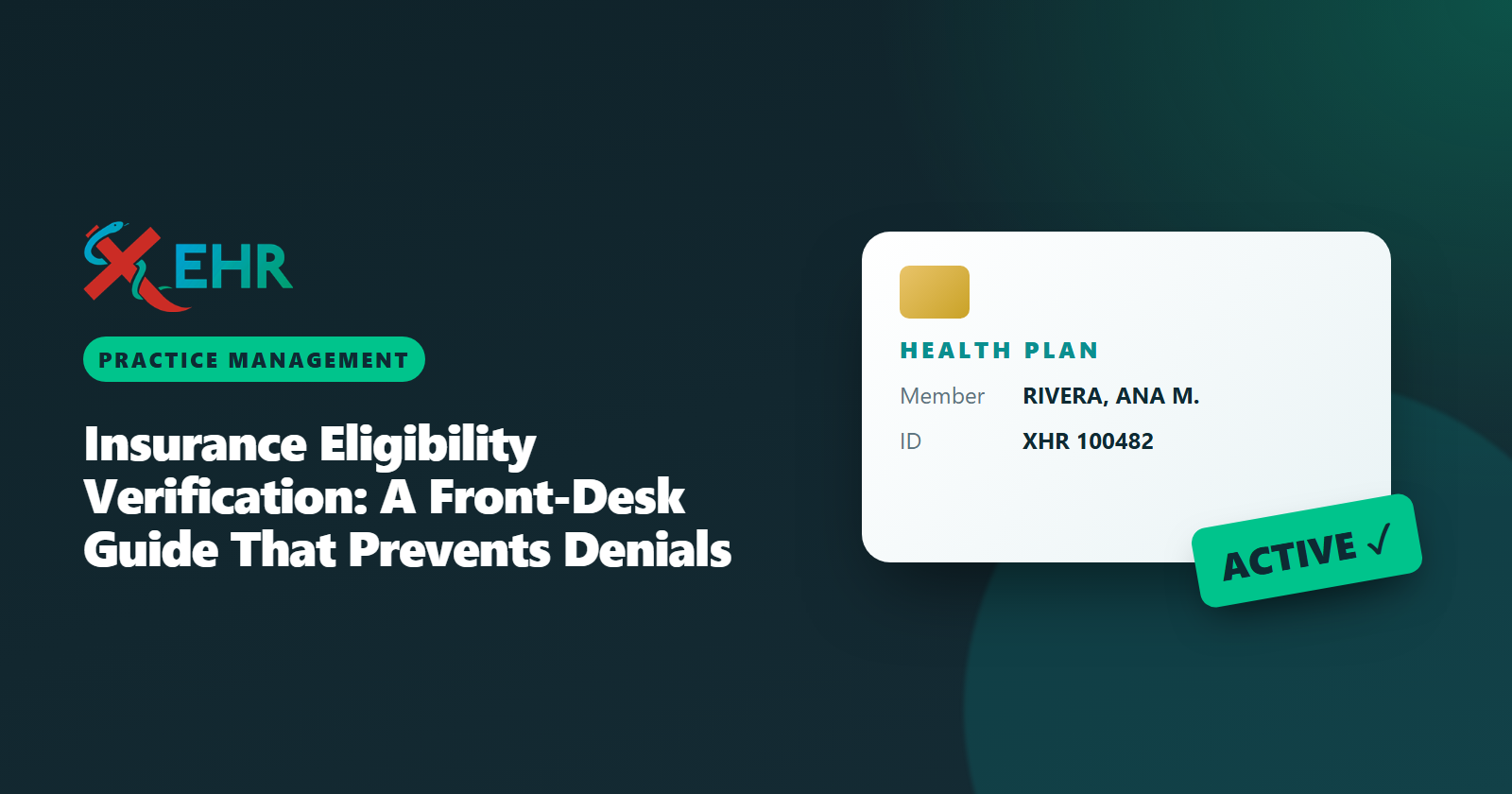
Eligibility verification is the cheapest denial prevention a practice can do. A two-minute check before the visit prevents a denial that would take an hour to fix weeks later, and it tells the patient what they will owe before they leave.
Why it matters
In a national denials index of 3.3 billion claim transactions, registration and eligibility problems were the largest single cause of initial denials, about 24%. They are also among the most preventable: the information exists before the visit, it just has to be checked.
What to verify
| Item | Why it matters |
|---|---|
| Active coverage on the date of service | The most basic denial cause |
| Payer, plan and member ID | Typos and outdated cards cause rejections |
| Subscriber and relationship | Dependents are billed under the subscriber |
| Primary vs secondary coverage | Billing the wrong payer first means a denial |
| Copay, deductible remaining, coinsurance | Collect the right amount at check-in |
| Authorization or referral required | Prevents authorization denials |
| Network status of your provider | Out-of-network changes what the patient owes |
When to verify
- Every visit, not only new patients.
- The first weeks of January, when many plans change.
- Whenever a patient mentions a new job, marriage, a birthday that changes coverage, or a new card.
Manual vs electronic verification
Phone and portal
- Minutes per patient, on hold
- One portal per payer
- Results written by hand
Electronic, from the schedule
- Seconds per patient
- All payers in one place
- Results saved to the patient record
A front-desk checklist
- Scan the insurance card front and back at every visit; compare it with the record.
- Run eligibility for tomorrow’s schedule and work the problems today.
- Update the master insurance record once, so every new claim uses it.
- Note copay and deductible; tell the patient what they will owe.
- Flag services that need authorization before the patient arrives.
How to read an eligibility response
An electronic eligibility response is dense, and staff often look only for the word “active”. The useful information is further down. Read it in this order:
- Coverage dates. Confirm the plan is active on the date of service, not just today. A plan that ends at the end of the month matters for a visit booked next month.
- The plan the response is for. Large payers run many plans. Make sure the plan name matches the card and your contract, especially for Medicare Advantage and Medicaid managed care plans that look similar on paper.
- Benefits for the type of visit. Office visits, specialist visits, mental health, therapy and imaging can each have different copays and limits. Look at the benefit line that matches the service, not the first one on the page.
- Deductible and out-of-pocket amounts. Note the amount met so far, not only the total. It decides what the patient owes today.
- Messages and notes. Payers put important details here: referrals required, a different payer for behavioral health, or a carve-out for certain services.
When something is unclear, call the payer, write down the representative’s name and the call reference number, and save it to the patient record. If the claim is denied later, that note is your evidence.
Who pays first: coordination of benefits
When a patient has more than one plan, billing the wrong one first is one of the most common eligibility denials. A few rules cover most cases:
- A patient’s own employer plan usually pays before a plan they are covered on as a dependent.
- Children covered by both parents are usually handled by the “birthday rule”: the plan of the parent whose birthday comes earlier in the calendar year pays first. Divorce and custody orders can change this.
- Medicare patients who are still working, or whose spouse is, may have an employer plan that pays before Medicare. Medicare’s secondary payer rules decide, so ask about current employment at registration.
- Medicaid pays last behind almost every other coverage.
Record the order once, in the patient’s master insurance record, so every claim goes to the right payer first and the secondary claim follows automatically.
When coverage comes back inactive
An inactive result is not always the end of the conversation. Before turning the patient away or treating them as self-pay:
- Ask whether they have a new card or changed jobs recently; run the check again with the new details.
- Check for a typo in the member ID, date of birth or name spelling. A single wrong character returns “not found”.
- For Medicaid, ask whether the patient recently renewed or re-applied; coverage may be pending.
- If the patient is truly uninsured, explain the self-pay price before the visit. Practices must give uninsured and self-pay patients a good faith estimate of expected charges for scheduled care.
Telling the patient what they will owe
Eligibility work pays off twice: fewer denials, and fewer surprised patients. Use the verified copay, deductible remaining and coinsurance to tell the patient their expected share before the visit, collect the copay at check-in, and explain that the final amount depends on what the payer allows. Patients who know the number in advance pay faster and complain less.
Common eligibility mistakes
What goes wrong
- Checking only new patients
- Stopping at "active"
- Old card on file after a job change
- Secondary billed as primary
- No note of the payer call
What works
- Checking every visit, a day ahead
- Reading the benefit for the service
- Scanning the card at every visit
- Payer order set once, reused
- Call reference saved to the record