
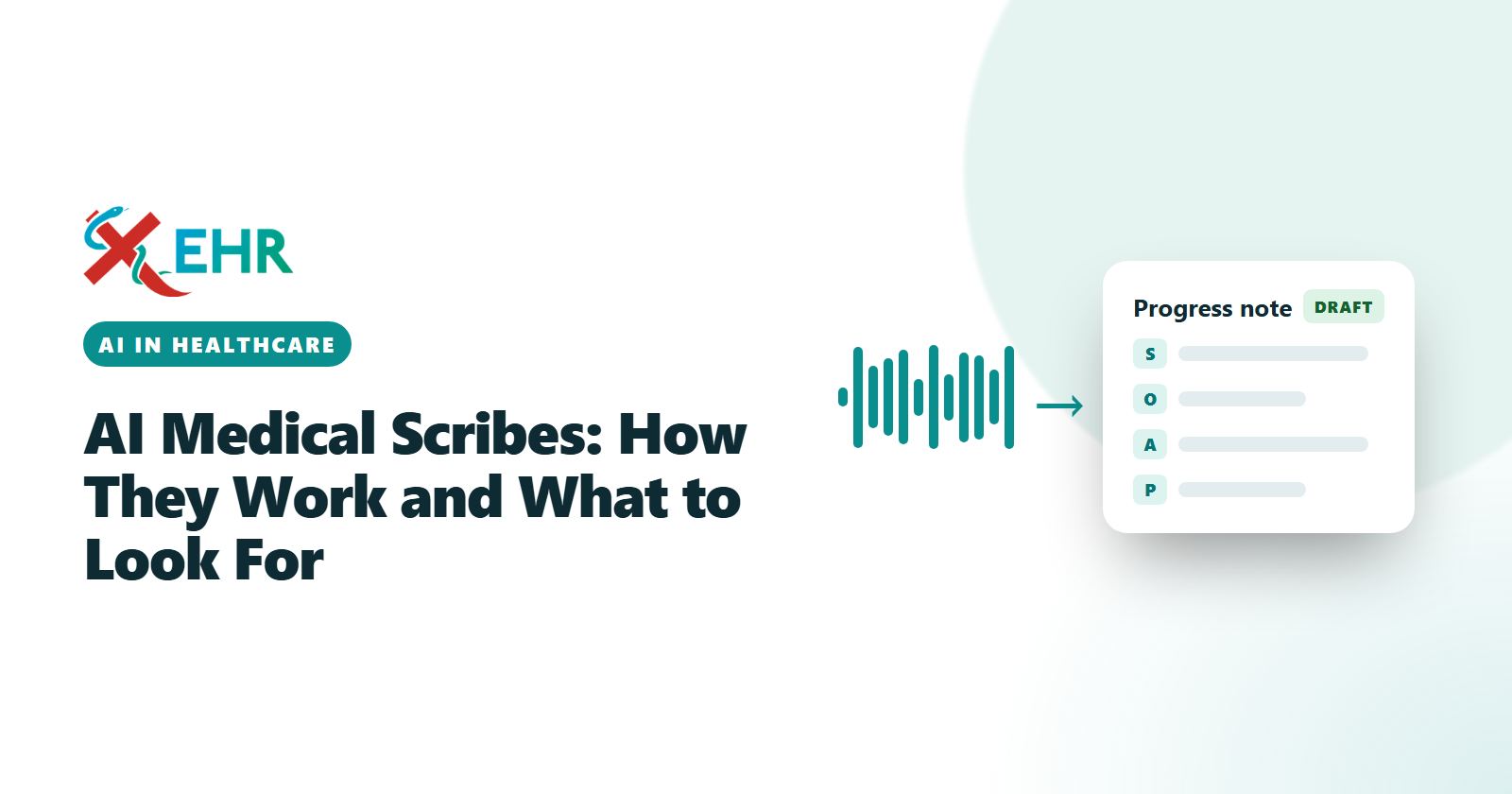
- An AI scribe drafts the note from the visit; the provider reviews, edits and signs.
- The biggest gains come when the scribe is inside the EHR, so the signed note flows to orders and the claim.
- Ask about consent, BAAs, data use, accuracy review and specialty templates before you buy.
- The provider remains responsible for every note.
Documentation is the work providers most want to give back. AI medical scribes, sometimes called ambient documentation, listen to the visit and draft the note, so the provider spends the visit with the patient instead of the keyboard, and the evening at home instead of in the chart.
How an AI scribe works
The scribe captures the conversation (with the patient’s consent), identifies the clinically relevant parts, and organizes them into the practice’s note structure: history, exam, assessment and plan. The provider reviews the draft, corrects anything missing or wrong, and signs.
Where AI scribes save the most time
- Narrative sections such as history of present illness, which take longest to type.
- Follow-ups and chronic care visits with many problems discussed.
- Patient instructions and summaries written in plain language.
Where they fall short
- Context the conversation never states, such as exam findings the provider did not say out loud.
- Specialty structure if the scribe uses one generic template for every visit type.
- Errors that look confident. A draft that reads well can still be wrong, which is why review is not optional.
Standalone scribe vs scribe inside the EHR
Standalone app
- Note copied into the EHR
- Separate login and vendor
- Codes and orders entered again
Built into the EHR
- Draft lands in the chart
- Signed note flows to orders and the claim
- One BAA, one audit trail
Getting consent right
Patients should know the visit is being captured and why, and they should be able to say no without any effect on their care. A short script works best: “I use a tool that helps me write my notes so I can focus on you. It listens to our conversation and I review everything before it goes in your chart. Is that okay?” Record the answer in the chart.
State law matters too. Some states require every party to a conversation to agree before it is recorded, so a practice-wide policy should follow the strictest rule that applies to your locations and to telehealth patients calling from other states. Sensitive visits, such as behavioral health, substance use or reproductive care, deserve an explicit check-in even when general consent is on file.
How to review an AI draft quickly
Review does not have to mean rewriting. Providers who get the most out of a scribe read the draft for the errors AI tends to make:
- Negations. “No chest pain” and “chest pain” are one word apart. Check every symptom the draft lists as present or absent.
- Medications and doses. Confirm names, strengths and changes against what was actually decided.
- Who said what. A family member’s history should not become the patient’s.
- Side and site. Left and right, and which finger, knee or lesion.
- Exam findings. If you examined but did not speak the findings aloud, add them; the scribe cannot record what it never heard.
- The plan. Make sure every order, referral and follow-up you intended is there, because the plan drives what happens next.
Rolling it out in a practice
- Start with a few willing providers and the visit types that cost them the most documentation time.
- Set the templates first. The draft is only as useful as the structure it fills; a therapy note, a procedure note and a well-child visit need different sections.
- Agree the consent process with the front desk and clinical staff before the first patient.
- Collect feedback weekly for the first month: what the draft gets wrong, which sections need the most editing.
- Then expand to the rest of the practice with the adjusted templates.
Measuring whether it works
Pick a few measures before you start, so the decision to keep or drop the tool rests on data rather than impressions:
- Time spent charting after hours, per provider.
- Notes signed the same day as the visit.
- How much each draft is edited before signing.
- Days from visit to claim, because notes that are signed sooner become claims sooner.
- Provider satisfaction, asked directly.
Questions to ask before you buy
- Consent: how is patient consent captured and recorded?
- BAA: will the vendor sign a Business Associate Agreement?
- Data use: is our data used to train models? Can we turn AI off entirely or by feature?
- Review: does the provider always approve before anything is saved or sent?
- Specialty fit: does the draft follow the right structure for psychiatry, therapy, OB, procedures?
- Audit: is every AI action recorded so we can see who approved what?
- Billing: do diagnoses and codes from the signed note reach the claim without re-entry?